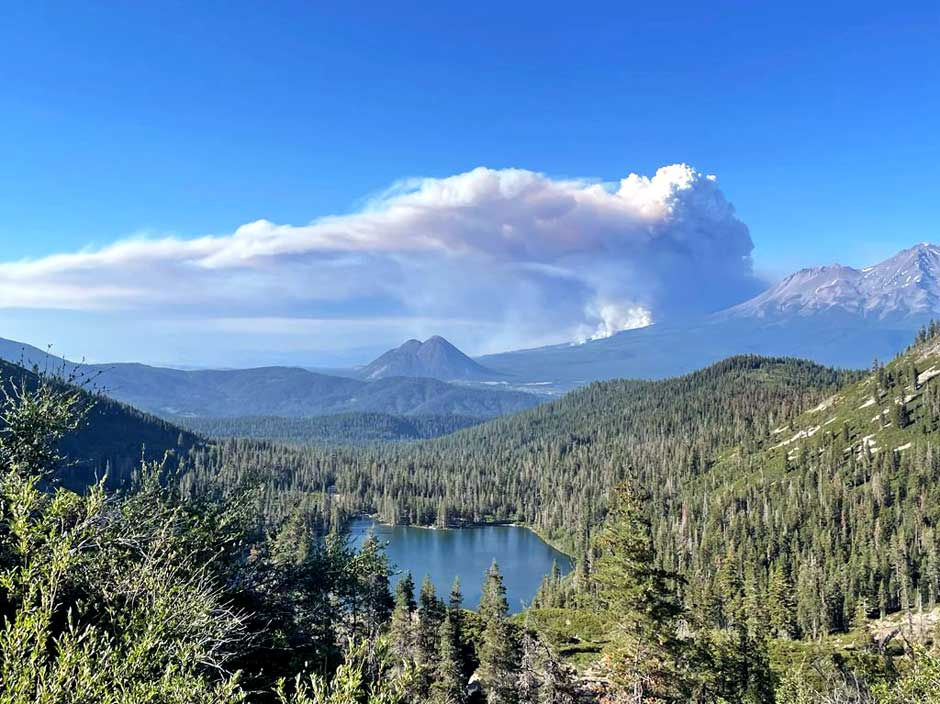
Lakes across North America are being impacted by wildfire smoke, even when the blaze is nowhere nearby
99% of lakes were impacted by wildfire smoke for at least one day each year between 2019-2021, 89% saw 30 days or more of smoke
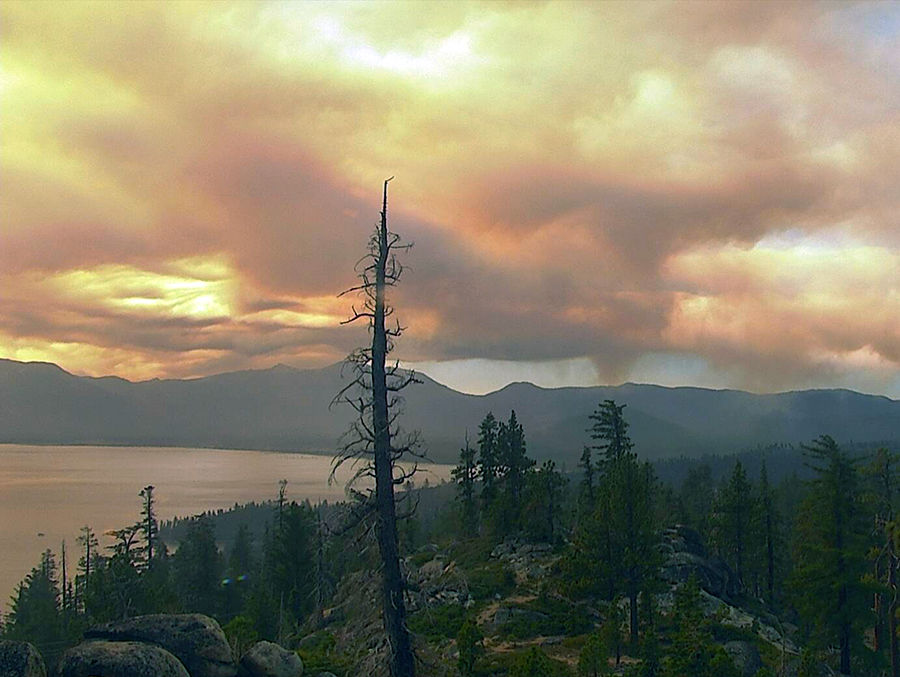
When wildfires burn near a lake, the impact is inevitable. Fire debris and ash could be seen falling into Lake Tahoe during the Caldor Fire burning just a few miles from the South Shore in 2021, for example. However, research published in the June 2024 issue of Global Change Biology shows that 99.3% of lakes across the country, whether adjacent to wildfire activity or nowhere near a blaze, were blanketed in wildfire smoke for at least one day per year from 2019 to 2021. Further, 98.9% of lakes saw 10 days of smokey skies each year and 89% of lakes saw more than 30 days of smoke per year. Understanding the impact of these ‘lake smoke-days’ on freshwater bodies will help researchers better prioritize responsive research as wildfire risk and frequency worldwide increase.
Sudeep Chandra, director of the Global Water Center and foundation professor at the University of Nevada, Reno, studies Lake Tahoe from the University’s Wayne L. Prim Campus in Incline Village, Nevada on the North Shore of Lake Tahoe.
“Understanding lake smoke-days is a major step forward for quantifying the impact of wildfire-generated smoke on our lakes and rivers,” Chandra said. “Humans can look at an air quality index to know their health may be impacted by wildfire smoke and pollution. Now we might be able to connect smoke days to the impact on freshwaters.”
This lake smoke-day research was a team science project led by the Global Lakes Ecological Observatory Network (GLEON) and was coordinated across many institutions, including UC Davis and the University of Nevada, Reno.