Wildfire smoke alters a lake’s ecology from the top to the bottom of the food chain
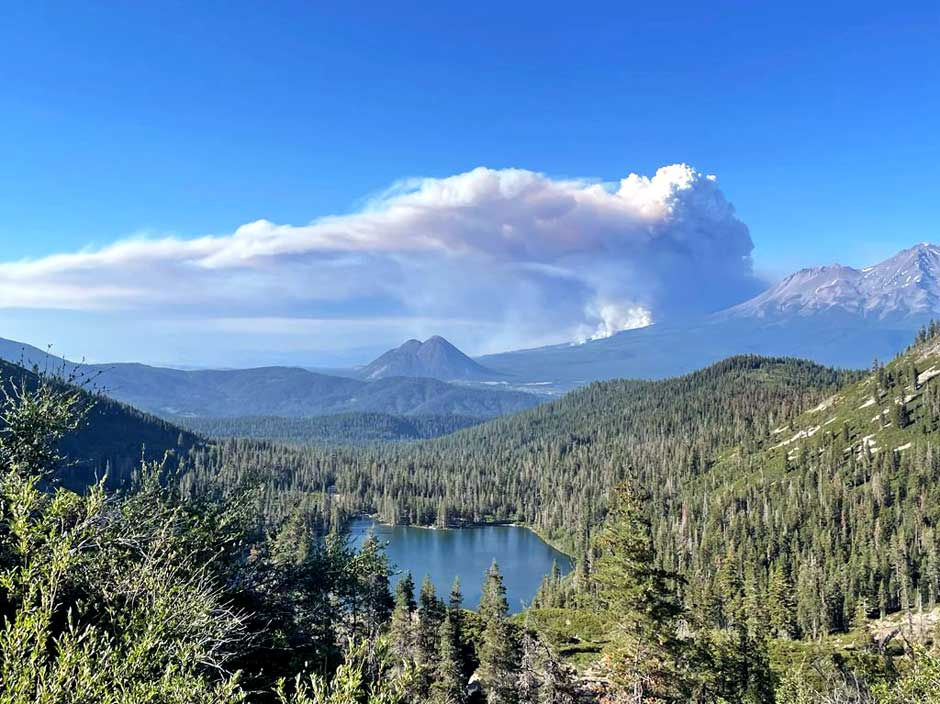
Wildfires have been big news the last couple of years. Australia’s wildfires in 2019 and 2020 and the Amazon rainforest fires in 2021 made headlines around the world. The American west has had record-breaking burns in recent years, blanketing cities in dangerous amounts of smoke and sending haze across the continent to the east coast.
While smoke has clear and apparent effects on the sky, new research finds it changed the ecology of Castle Lake, a freshwater lake in California, in 2018.
“There are some studies that have analyzed the effect of human health in respiration with the smoke of wildfire,” said Facundo Scordo, a postdoctoral researcher at the Global Water Center of the University of Nevada—Reno. “What we found in the paper is that the respiration of the lake has been affected by the smoke in the same way it affects human life.”
Smoke can alter a lake’s temperature and primary production. It can even change where fish are. During a particularly smoky period, rainbow trout that regularly turn up in shallow water sampling were gone.
“We were very surprised because we come every year and, with the same methodology, this is the first time [no rainbow trout were caught],” said Scordo who authored the study on Castle Lake in California with a team from University of Nevada—Reno, Rensselaer Polytechnic Institute, Miami University (Ohio), University of California—Davis. The paper was recently published in Scientific Reports.
Changes to the lake’s ecology occurred up and down the food web, down to the very bottom.


