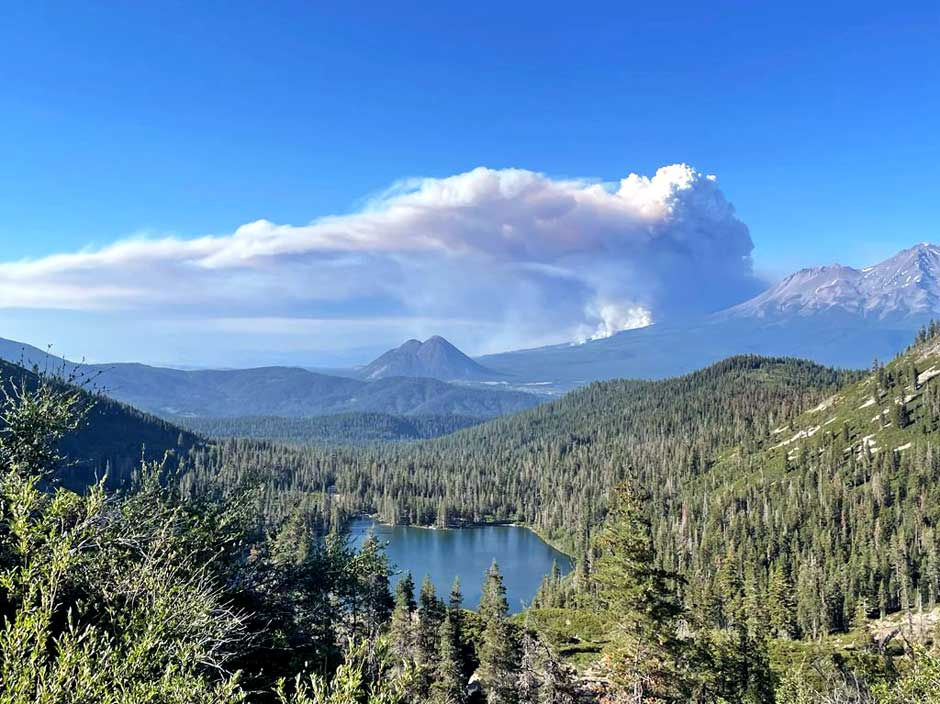
Wildfire smoke alters lake ecosystems on regional scale

The wildfire season has arrived in North America, and recent research highlights that the impacts of wildfire smoke emissions can alter aquatic ecosystems far away from the sources of the fire.
In the summer of 2018, intense smoke from six major wildfires covered Castle Lake, west of Mt. Shasta California, for 55 days. Researchers from the University of Nevada, Reno, which co-facilitates research operations at the 50-acre lake, showed a significant change to the biology, chemistry and physical dynamics in the lake.
"The most significant aspect of this study is that wildfire can modify ecosystems hundreds of miles away from locations that are burning, and the impacts from smoke remain well after the smoke disappears" Facundo Scordo, a researcher with the University's Global Water Center and Department of Biology and lead author of the study, said. "Trout also disappeared from the nearshore edge of the lake, presumably moving to the open water habitat where there are smaller food particles called zooplankton for them to eat.”
Other studies have similarly shown that smoke plumes have the potential to cool the surface of the earth by reducing the amount of incoming solar radiation that reaches the ground. Similarly, wildfire smoke from previous fires decreased water temperatures of 12 rivers and streams located in the lower Klamath River Basin in northern California.